


 April 01, 2015


Free Ebook Systematic Theology (Volume 1)
Why need to be book Systematic Theology (Volume 1) Book is among the very easy sources to try to find. By obtaining the author and also style to get, you can locate many titles that supply their information to obtain. As this Systematic Theology (Volume 1), the motivating book Systematic Theology (Volume 1) will provide you exactly what you should cover the job deadline. And why should remain in this site? We will ask first, have you a lot more times to choose going shopping guides and hunt for the referred publication Systematic Theology (Volume 1) in book establishment? Lots of people might not have enough time to find it.
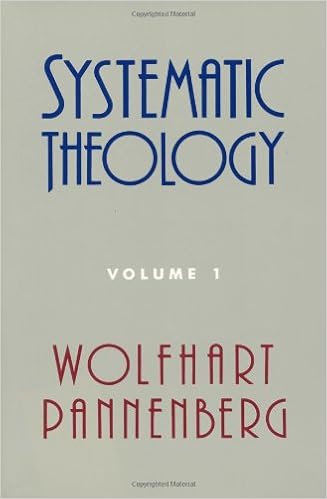
Systematic Theology (Volume 1)

Free Ebook Systematic Theology (Volume 1)
What to claim when finding your favourite book here? Thanks God, this is a great time. Yeah, many people have their particular in obtaining their favourite points. For you guide lovers, real readers, we show you currently one of the most inspiring great publication from the world, Systematic Theology (Volume 1) A publication that is created by a really professional writer, a publication that will certainly influence the world a lot, is yours.
As well as why don't try this book to check out? Systematic Theology (Volume 1) is among one of the most referred reading product for any type of degrees. When you truly wish to seek for the new motivating publication to review as well as you do not have any kind of concepts whatsoever, this complying with book can be taken. This is not made complex publication, no complex words to read, as well as any type of challenging theme and also topics to understand. The book is really appreciated to be one of one of the most motivating coming publications this just recently.
You can make different thing of just how analysis will certainly offer you far better selection. Yeah, Systematic Theology (Volume 1) is a publication developed by a professional writer. You could take this kind of publication in this site. Why? We offer the billions types and also brochures of the books on the planet. So, actually, it is not only this publication. You can discover various other book types to be your own. The means is really simple, find the link that we provide and get the book sooner. Constantly attempt to be the first person to read this publication is really enjoyable.
Obtaining the soft data of this book can be easy done. Just by clicking the web link, you could connect to guide soft data and start to get it. When you have saved Systematic Theology (Volume 1) in your gadget, you could faster begin reviewing. See from the title of this book, it can be selected as well as outlined exactly how this book exists. They are really well done and so ideal to review accompanying your free time.
From Library Journal
An important mark of a systematic theology is that it be distinct from the rest; owning one does not preclude the need for others. What distinguishes Pannenberg's (systematic theology, Univ. of Munich) is his insistent attention to "the truth of Christian doctrine." How to arrive at this truth and how it informs understanding of God and humanity is the subject of this first of three volumes. His argument is painstakingly arranged and rightfully builds on centuries of Christian discourse. At times Pannenberg seems to make divine truth contingent upon human understanding, which nearly undermines his case. Still, he is unapologetically straightforward where others might beg the question. Recommended for seminary libraries; university libraries should wait for all three volumes to assess need. Most public libraries will find scant call for this.-W. Alan Froggatt, Bridgewater, Ct.Copyright 1991 Reed Business Information, Inc.
Read more
Review
"dense, demanding, often provocative, rarely comfortable, and built upon a non-evangelical doctrine of revelation." -- Foundations 47 (Autumn 2001)
Read more
See all Editorial Reviews
Product details
Series: Systematic Theology (Book 1)
Hardcover: 487 pages
Publisher: Wm. B. Eerdmans Publishing Company; 1st US Edition edition (October 18, 1991)
Language: English
ISBN-10: 0802836569
ISBN-13: 978-0802836564
Product Dimensions:
6.5 x 1.2 x 9.2 inches
Shipping Weight: 1.6 pounds
Average Customer Review:
4.6 out of 5 stars
6 customer reviews
Amazon Best Sellers Rank:
#1,273,280 in Books (See Top 100 in Books)
I noticed that no one seemed to supply the table of contents for Vol. 1, and so I thought it would be helpful to provide that here. As an interesting side note, I've heard from some friends that Pannenberg is a wonderful preacher. I'd be curious to hear how he brings works like this to those entrusted to his care.Not light reading, can be a bit dry, but worth it.CONTENTS:AbbreviationsForewordChapter 1 The Truth of Christian Doctrine as the Theme of Systematic Theology~Theology~The Truth of Dogma~Dogmatics as Systematic Theology~The Development and Problem of So-called Prolegomena to Dogmatics~The Truth of Christian Doctrine as the Theme of Systematic TheologyChapter 2 The Concept of God and the Question of Its Truth.~The Word "God"~Natural Knowledge of God and Natural Theology~The Proofs of God and Philosophical Criticism of Natural Theology~Theological Criticism of Natural Theology~The "Natural" Knowledge of GodChapter 3 The Reality of God and the Gods in the Experience of the Religions~The Concept of Religion and Its Function in Theology a. Religion and the Knowledge of God b. The Concept of Religion, the Plurality of Relgions, and the "Absoluteness" of Christianity~The Anthropological and Theological Nature of Religion~The Question of the Truth of Religion and the History of Religion~The Religious RelationChapter 4 The Revelation of God~The Theological Function of the COncept of Revelation~The Multiplicity of Biblical Ideas of Revelation~The Function of the Concept of Revelation in the History of Theology~Revelation as History and as Word of GodChapter 5 The Trinitarian God~The God of Jesus and the Beginnings of the Doctrine of the Trinity~The Place of the Doctrine of the Trinity in the Dogmatic Structure and the Problem of Finding a Basis for Trinitarian Statements~Distinction and Unity of the Divine Persons a. The Revelation of God in Jesus Christ as the Starting Point, and the Traditional Terminology of the Doctrine of the Trinity b. The Reciprocal Self-Distinction of Father, Son, and Spirit as the Concrete Form of Trinitarian Relations c. Three Persons but only One GodChapter 6 The Unity and Attributes of the Divine Essence~The Majesty of God and the Task of Rational Discussion of Talk about God~The Distinction between God's Essence and Existence~God's Essence and Attributes and the Link between Them in Action~God's Spirituality, Knowledge, and Will~The Concept of Divine Actiona dnt eh Sturcture of the Doctrine of the Divine Attributes~The Infinity of God: His Holiness, Eternity, Omnipotence, and Omnipresence a. The Infinity and Holiness of God b. The Eternity of God c. The Omnipresence and Omnipotence of God~The Love of God a. Love and Trinity b. Attributes of the Divine Love c. The Unity of GodIndexes~~~~~Subjects~~~~~Names~~~~~Scripture ReferencesAnd there is the Table of Contents, for those strange folks, like me, who enjoy seeing these things before we dive in.
I have indicated the degree to which I have appreciated this purchase and how it his been of value to me. Hope you have the same experience that I did and that it will be beneficial to you.
Wolfhart Pannenberg has a comprehensive style where he gives the reader a synopsis of the entire history of theological thought - all crammed into the first volume. Pannenberg takes us through a series of viewpoints and alternative viewpoints, giving us a chronological sequence of a multitude of varying theologies. After demonstrating to the reader how alternative theologies have evolved over time, he gives us new, innovative ideas based on a fusion of the best aspects of past ideas. He gives us a complete history of theology regarding such subjects as the Trinity, the split between evangelical, natural, and systematic theology, and the establishment of consciousness through the Trinity. He then settles on his own original ideas based on an exhaustive study of all of the alternative theories throughout history. The end result is a fantastic new vision of the preservation of consciousness through God, the Son, and the Spirit.Pannenberg starts this volume with a detailed exploration of the split between Barthian evangelical theology and natural theology. This split is one of the most important questions facing theologians today. He makes a scathing critique of Barth's orthodox evangelical theology in favor of a more relaxed natural theology that allows for a universal salvation. He discusses various forms of natural saving dispositions and natural salvation energy. This energy acts before or independently of Christ, using the Spirit to pave the way for Christ. In this sense the Spirit acts to glorify Christ in both past, present and future.Pannenberg's idea of the natural knowledge of God is based on the idea of "the finite being carved out of the infinite" (p.139). "Dissatisfaction with the finite can take the form of the question of God only on the condition of a knowledge of God that is gained elsewhere" (p.116). In other words, as long as we have basic knowledge of the existence of God, we will have a sense of dissatisfaction with the finite. This causes us to look at the finite more carefully, leading to basic self-conscious being. This concept is very reminiscent of Jurgen Moltmann's ideas regarding God's natural saving dispositions as described in the Crucified God. As long as we have some basic concept of the eternal, we will have a concept of the temporal in contradistinction. "The truth is that the finite is not self-grounded but is carved out of the infinite and the totality" (p.140).Pannenberg describes this as natural knowledge of God because this type of awareness of finitude can penetrate the secular realm, even if people are not aware of it. "Religious awareness stands in opposition to secular awareness only because the latter is not aware of the fact that finite objects are conditioned by their being carved out of the infinite and defined by it... the holy in religious awareness can also be viewed as constitutive for our secular reality" (140). The important thing to remember here is that a very basic idea of the eternal conditions our awareness of the temporal, and we will have consciousness as long as this basic knowledge of God is in place. But this awareness of finitude is "not self-grounded" but "carved out of the infinite", proving that God is in fact necessary for natural conscious awakening. This is roughly the basis of Pannenberg's natural theology - a basic and primordial consciousness of our selves as finite in contrast to a general idea of an eternal God.Perhaps even more important, however, is Pannenberg's discussion of the Trinity. This is based on "the glorifying of the Son by the Spirit" (p.315). Basically, the Spirit orchestrates world-historic events on a grand scale using subconscious psychic undercurrents (possibly related to what depth-psychologists call the collective unconscious). These events ultimately force us to turn to Christ, glorifying Christ and God by showing us the internal logic and synchronicity within world events. This is how "the Spirit glorifies not himself but the Son, and in him the Father" (315). The Son glorifies the Father by proving the Father's love through forgiveness of sins and promise in the afterlife. These prove to be the critical missing pieces in glorifying God. And the Spirit orchestrates the life-changing events which force us to turn back to Christ. This is how we go from Spirit to Christ to Father. Before Christ there was no world harmony, so the glorification of the Father could not be complete without the Son. But the pre-Christian events were orchestrated by the Spirit to create a society that could recieve the Son. This is how the Spirit > Son> Father sequence works.Look, this is a very difficult book and any discussion of the Trinity provides infinite food for thought. We cannot achieve a full understanding of the Trinity in a short review. All I can say is if you are reading this and you want to get caught up with the latest trends in theology you have to attempt this book. Good luck.
Systematic Theology (Volume 1) PDF
Systematic Theology (Volume 1) EPub
Systematic Theology (Volume 1) Doc
Systematic Theology (Volume 1) iBooks
Systematic Theology (Volume 1) rtf
Systematic Theology (Volume 1) Mobipocket
Systematic Theology (Volume 1) Kindle