Saturday, September 30, 2017

Free Ebook Nice Little Town: Adult Coloring Book (Stress Relieving Coloring Pages, Coloring Book for Relaxation) (Volume 6), by Tatiana Bogema (Stolova)

Nevertheless, checking out guide Nice Little Town: Adult Coloring Book (Stress Relieving Coloring Pages, Coloring Book For Relaxation) (Volume 6), By Tatiana Bogema (Stolova) in this website will certainly lead you not to bring the printed book almost everywhere you go. Merely keep guide in MMC or computer system disk and also they are readily available to check out any time. The prosperous system by reading this soft data of the Nice Little Town: Adult Coloring Book (Stress Relieving Coloring Pages, Coloring Book For Relaxation) (Volume 6), By Tatiana Bogema (Stolova) can be leaded into something new behavior. So now, this is time to prove if reading could improve your life or otherwise. Make Nice Little Town: Adult Coloring Book (Stress Relieving Coloring Pages, Coloring Book For Relaxation) (Volume 6), By Tatiana Bogema (Stolova) it surely work as well as get all benefits.

Nice Little Town: Adult Coloring Book (Stress Relieving Coloring Pages, Coloring Book for Relaxation) (Volume 6), by Tatiana Bogema (Stolova)

Nice Little Town: Adult Coloring Book (Stress Relieving Coloring Pages, Coloring Book for Relaxation) (Volume 6), by Tatiana Bogema (Stolova)


Nice Little Town: Adult Coloring Book (Stress Relieving Coloring Pages, Coloring Book for Relaxation) (Volume 6), by Tatiana Bogema (Stolova)


Free Ebook Nice Little Town: Adult Coloring Book (Stress Relieving Coloring Pages, Coloring Book for Relaxation) (Volume 6), by Tatiana Bogema (Stolova)

Superb Nice Little Town: Adult Coloring Book (Stress Relieving Coloring Pages, Coloring Book For Relaxation) (Volume 6), By Tatiana Bogema (Stolova) publication is constantly being the most effective good friend for investing little time in your workplace, night time, bus, and almost everywhere. It will certainly be an excellent way to simply look, open, as well as check out the book Nice Little Town: Adult Coloring Book (Stress Relieving Coloring Pages, Coloring Book For Relaxation) (Volume 6), By Tatiana Bogema (Stolova) while in that time. As recognized, encounter as well as ability do not consistently had the much money to get them. Reading this publication with the title Nice Little Town: Adult Coloring Book (Stress Relieving Coloring Pages, Coloring Book For Relaxation) (Volume 6), By Tatiana Bogema (Stolova) will let you know much more points.

When you have actually determined to look for the brand-new book title coming as the latest book collection. Finding the title based on the subject here is so simple. You could not feel so hard to discover it because we means make the listings of what's new in the site. Also this site offers you the connect to obtain the soft data of the book; we always provide you the best that can alleviate to discover the book, as the Nice Little Town: Adult Coloring Book (Stress Relieving Coloring Pages, Coloring Book For Relaxation) (Volume 6), By Tatiana Bogema (Stolova) that we have advised.

The reasons that make you have to read it is the related topic to the problem that you really want now. When it's going to make better chance of reading products, it can be the means you have to take in similarly. Yeah, the ways that you could appreciate the time by reviewing Nice Little Town: Adult Coloring Book (Stress Relieving Coloring Pages, Coloring Book For Relaxation) (Volume 6), By Tatiana Bogema (Stolova), the time that you could utilize to do excellent task, and the time for you to get exactly what this publication uses to you.

Depending on the needs, this publication likewise includes the willingness of lots of people to earn modifications. The way is by locating the web content and how you recognize it. One that need to be remembered is that this book is likewise composed by a great author, great author wit professionalism. So, Nice Little Town: Adult Coloring Book (Stress Relieving Coloring Pages, Coloring Book For Relaxation) (Volume 6), By Tatiana Bogema (Stolova) is much suggested for you, a person who expects far better way to living style.

Nice Little Town: Adult Coloring Book (Stress Relieving Coloring Pages, Coloring Book for Relaxation) (Volume 6), by Tatiana Bogema (Stolova)

Product details

Series: Nice Little Town (Book 6)

Paperback: 56 pages

Publisher: CreateSpace Independent Publishing Platform (August 15, 2018)

Language: English

ISBN-10: 1725594927

ISBN-13: 978-1725594920

Product Dimensions:

8.5 x 0.1 x 11 inches

Shipping Weight: 7 ounces (View shipping rates and policies)

Average Customer Review:

4.7 out of 5 stars

30 customer reviews

Amazon Best Sellers Rank:

#17,947 in Books (See Top 100 in Books)

 This is the third Nice Little Town to focus on the cute abodes of mice. As with the second book, the houses in this book are more modern (compared to those in the first book.)The mouses are long and lean rather than round and cute. Some of them look like they are adolescents who are going through a growth spurt and their clothes are getting a little too short.Once again, these mice are having fun. They are going about their day and living life well. There is a design of one mouse taking a shower via a watering can spout (how inventive!) There is another with a class learning the importance of recognizing a C A T.Both my husband and I are enjoying these books and would be happy to see more of them. I have many coloring books by this artist and am always impressed by her range and by her skill.Just a note, this time the author did not include bonus pages from her other books. She did, however, include thumbnail images from those books, so you can still see the types of designs that are available.This is what I found in this coloring book:25 mouse and mouse house designs in the bookPrinted one side of the pagePaper is typical inexpensive quality by CreateSpace printing: white with black on the reverse side, thin, slightly rough and non-perforated.The designs do not merge into the binding.Glue BindingCreate Space Paper/Media QualityAlcohol-based markers bleed through the page quickly.Water-based markers bleed through in spots.Gel pens and India ink pens leave shadows on back of the page. India ink can bleed through if you apply heavily or multiple coats.Even though the black on the reverse side of the page “covers” the bleed through” of various media, it does still bleed through. So, protect your work and your coloring book. I like to use a blotter when working in this type of book. I use a page of card stock or several sheets of heavyweight paper under my working page. It keeps seeping ink and marring dents from ruining the pages below.Coloring Pencils work fairly well with this publisher’s paper provided you don’t press extremely hard while coloring. I find that I can layers the same color for deeper pigment or multiple colors and blended easily with a pencil style blending stick. This is true of both oil and wax based pencils. I have also found that hard lead pencils leave dents through the paper.

I really like these coloring books....I bought Volume 2 along with Volume 6. I really like the 7x10 size better than the 8x11. The 8x11 has a black and thicker back and the 7x10 does not. These would be perfect if the 7x10 size would be combined with the black thicker backing on the page.

These books with the little mice are so freaking cute. They are so fun to do too. I like using markers and chalk cause they really pop with color.

I am a big fan of the Nice Little Town series. I own all of them! They are wonderful to color. I have had many happy hours with them. Sadly, the last two were a little skimpy on the new drawings and heavy on drawings from the artist's other books. I can't help feel a little cheated.

Nice Little Town 6 has to be the best one yet. It is full of the most adorable pictures. I must say as much as I enjoyed the others I have purchased, this is my favorite. The artist Tanya Bogema (Stolova) has out-done herself this time. I cannot wait to start coloring in this beautiful book. I would recommend to any coloring enthuasist.

Loved the many choices of snowy holiday pictures! The Little Town Books are so cute I ordered 2 others for after the holidays. I like a the different settings, inside a treehouse, a building with a family, shopping in town and the family.I have assorted old colored pencils which I had hoped to update with a new larger box of better pencils to shade and blend colors, but I think the pictures came out nice.

I love these books...1-6 and the 2nd Christmas book. (I missed the 1st) 1 have over 40 coloring books and they are my favorites.

This is one of my all time favorite collections/series of coloring books. This one is as good if not better than the others and I hope to see more in the future! Gorgeous book with lots of fun pages to color!

Nice Little Town: Adult Coloring Book (Stress Relieving Coloring Pages, Coloring Book for Relaxation) (Volume 6), by Tatiana Bogema (Stolova) PDF
Nice Little Town: Adult Coloring Book (Stress Relieving Coloring Pages, Coloring Book for Relaxation) (Volume 6), by Tatiana Bogema (Stolova) EPub
Nice Little Town: Adult Coloring Book (Stress Relieving Coloring Pages, Coloring Book for Relaxation) (Volume 6), by Tatiana Bogema (Stolova) Doc
Nice Little Town: Adult Coloring Book (Stress Relieving Coloring Pages, Coloring Book for Relaxation) (Volume 6), by Tatiana Bogema (Stolova) iBooks
Nice Little Town: Adult Coloring Book (Stress Relieving Coloring Pages, Coloring Book for Relaxation) (Volume 6), by Tatiana Bogema (Stolova) rtf
Nice Little Town: Adult Coloring Book (Stress Relieving Coloring Pages, Coloring Book for Relaxation) (Volume 6), by Tatiana Bogema (Stolova) Mobipocket
Nice Little Town: Adult Coloring Book (Stress Relieving Coloring Pages, Coloring Book for Relaxation) (Volume 6), by Tatiana Bogema (Stolova) Kindle

Nice Little Town: Adult Coloring Book (Stress Relieving Coloring Pages, Coloring Book for Relaxation) (Volume 6), by Tatiana Bogema (Stolova) PDF

Nice Little Town: Adult Coloring Book (Stress Relieving Coloring Pages, Coloring Book for Relaxation) (Volume 6), by Tatiana Bogema (Stolova) PDF

Nice Little Town: Adult Coloring Book (Stress Relieving Coloring Pages, Coloring Book for Relaxation) (Volume 6), by Tatiana Bogema (Stolova) PDF

Saturday, September 16, 2017

PDF Ebook Why Does College Cost So Much?, by Robert B. Archibald David H Feldman

Taking this book is additionally very easy. Visit the link download that we have actually offered. You can really feel so pleased when being the member of this on-line collection. You could additionally find the other book collections from worldwide. Once again, we here offer you not just in this sort of Why Does College Cost So Much?, By Robert B. Archibald David H Feldman We as provide numerous guides collections from old to the new updated book around the globe. So, you might not be afraid to be left behind by understanding this book. Well, not just understand about guide, yet know exactly what the book uses.

Why Does College Cost So Much?, by Robert B. Archibald David H Feldman

Why Does College Cost So Much?, by Robert B. Archibald David H Feldman


Why Does College Cost So Much?, by Robert B. Archibald David H Feldman


PDF Ebook Why Does College Cost So Much?, by Robert B. Archibald David H Feldman

Exactly what's your necessity to be reviewing product in this time? Is that guide that relates to the obligations? Is that the book that can entertain you in your lonely time? Or, is that just kind of publication that you can review to accompany the spare time? Every person has different reason why they choose the particular publication. It will feature specific cover design, interesting title, recommended topic, needed motif, as well as specialist writers.

Checking out, once again, will certainly give you something new. Something that you do not know then revealed to be renowneded with guide Why Does College Cost So Much?, By Robert B. Archibald David H Feldman notification. Some understanding or driving lesson that re received from reviewing publications is uncountable. More e-books Why Does College Cost So Much?, By Robert B. Archibald David H Feldman you read, even more knowledge you get, and more possibilities to always enjoy reading books. Because of this factor, checking out e-book should be begun with earlier. It is as just what you can obtain from guide Why Does College Cost So Much?, By Robert B. Archibald David H Feldman

When talking about the completed benefits of this publication, you can take the evaluation of this book. Several testimonials reveal that the readers are so pleased as well as surprised in Why Does College Cost So Much?, By Robert B. Archibald David H Feldman They will leave the excellent voices to vote that this is a great book to check out. When you are very interested of exactly what they have read, your turn is just by reading. Yeah, reading this publication will be not any problems. You could get this publication conveniently and read it in your only spare time.

By clicking the web link that we provide, you can take guide Why Does College Cost So Much?, By Robert B. Archibald David H Feldman perfectly. Link to internet, download, as well as save to your device. Just what else to ask? Reviewing can be so simple when you have the soft data of this Why Does College Cost So Much?, By Robert B. Archibald David H Feldman in your device. You can also duplicate the file Why Does College Cost So Much?, By Robert B. Archibald David H Feldman to your workplace computer or at home or perhaps in your laptop computer. Just share this good news to others. Suggest them to see this resource and also get their looked for publications Why Does College Cost So Much?, By Robert B. Archibald David H Feldman.

Why Does College Cost So Much?, by Robert B. Archibald David H Feldman

Review

"A useful introduction to a complex problem" -- Bill Gates, "Best Books I Read in 2013""[The authors] really know what they're talking about."--Stanley Fish, The New York Times"A book that should be read by anyone with even a passing interest in the answer"--Brian Rosenberg, president of Macalaster College, writing in The Huffington Post"Robert Archibald and David Feldman tackle the dominant question facing higher education leaders, state and federal policy makers, families and students, and provide striking and surprising evidence and conclusions on the much-debated question that is the title of their book. In the process of proposing a radically new way of financing college and university education, they present an elegant history of how we got here, the financial problems we currently face, and a possible way out of these dilemmas. This eminently readable book warrants the thoughtful attention of all who care (and worry) about the future of higher education."--David W. Breneman, University Professor and Newton and Rita Meyers Professor in Economics of Education, University of Virginia "Robert Archibald and David Feldman write calmly and rationally about an issue that too frequently generates sensationalist headlines, as well as poorly reasoned and counterproductive proposals. Whether or not you agree with the details of their ideas for reforming the way we finance higher education, you will learn from their analysis, question your pre-conceived notions, and think more clearly about how our nation can best assure that a quality higher education is affordable for all who are equipped and motivated to benefit from it."--Sandy Baum, Professor Emerita of Economics, Skidmore College

Read more

About the Author

Robert B. Archibald is Chancellor Professor of Economics and Public Policy at the College of William and Mary. Together with David Feldman, he has published widely on the economics of higher education.David H. Feldman is Professor of Economics and Public Policy, and Chair of the Department of Economics at the College of William & Mary. He has also been honored with a University Professorship for Teaching Excellence. In addition to his work with Robert Archibald on higher education he writes about the international economy.

Read more

Product details

Hardcover: 304 pages

Publisher: Oxford University Press; 1 edition (November 17, 2010)

Language: English

ISBN-10: 0199744505

ISBN-13: 978-0199744503

Product Dimensions:

9.3 x 1.1 x 6.4 inches

Shipping Weight: 1.2 pounds (View shipping rates and policies)

Average Customer Review:

4.0 out of 5 stars

22 customer reviews

Amazon Best Sellers Rank:

#978,178 in Books (See Top 100 in Books)

This is a lucid and measured attempt to put the `cost of college attendance' in an appropriate context. Eschewing the apocalyptic outcries from other commentators (including those in the popular press) they argue that the `unaffordability crisis' has been much exaggerated. In fact, college costs should not be seen in the context of, e.g., durable goods (whose prices have indeed diminished) but rather in the context of the products of service industries (lawyers, dentists) which require highly-educated practitioners. Seen in that light, college costs track very nicely with other service industry costs and should not be causes of alarm.The authors also deflate some of the popular outcries by pointing to the realities of actual pricing. Very few people pay the top-dollar charges of elite institutions and they can generally afford to do so without significant pain. Top institutions have deep financial-aid coffers and tuitions are discounted significantly. While the COFHE schools discourage merit-based support, e.g., their need-based support is generous; at the very top schools the support is largely (or even exclusively) in the form of grants rather than loans. Many distinguished private institutions and public institutions, generally, often offer merit-based support as well. Universities should not be thought of as Bentley dealerships, with prices beyond the means of all but the most wealthy consumers. On the contrary, they are much more like airplanes in which every passenger is paying a different price, in some cases a very modest price.Moreover, much more attention should be paid to cost, not price. The actual cost of education is generally far higher than even the top rack-rate tuition. This cost is reduced by private colleges' endowments and public colleges' state contributions.This is all true and it is all explained in great detail and with great transparency. While there are charts and graphs there are no mathematical formulae that would be opaque to the non-economist. In terms of economic analysis, this is as simple and straightforward as it gets.At the same time, from certain perspectives, college costs have risen dramatically and they are, indeed, troubling. The authors point out, for example, that living standards have generally risen in America and, with them, costs. The bare and simple dorms of yesteryear would not be to current students' taste. And, of course, the technological revolution will not be denied. The one-phone per floor dormitory of the past has been replaced by the wi-fi dorm of the present and the cafeterias offer greater choice and more healthy selections. This all comes at a price.Given this orientation, however, the authors are not at pains to look, in depth, at a number of contemporary costs. The endless nanny-state services of the modern college and university come at a considerable cost. They could be offered on an individual rather than mandatory basis. Students could receive some services (as all of the rest of us do) from the community beyond the college gates or, alternatively, the college could offer some of the services it provides to students to the surrounding community on a cost basis. Services, once provided, are difficult to withhold, particularly if other institutions offer them. However, while some institutions have made it a point to attract the affluent by erecting luxury dorms, some even with valet parking, I have seen very little evidence of institutions advertising that "your tuition dollar here goes largely to instruction, while our competitors invest no more than 25-35% on instruction--the putative purpose of your being here in the first place."In short, the funding models are nearly always based on imitation (what does our competition or what does Harvard provide?) rather than on distinctiveness. Except for St. John's in Maryland and Santa Fe the vast majority of institutions look alike. More often than not (= nearly always) their curricula look the same and favor "choice" over distinctive requirements. How many institutions (beyond the service academies, for example) can be said to offer a bona fide "signature" such that your attendance there changes you in a special, valuable, noticeable way?The authors also offer solutions to our current situation--grants to individual students (across the board) in lieu of the multiplicity of federal contributions and grants to individual students within states rather than state grants to individual institutions (in effect, the Colorado model or, in a sense, the Miami of Ohio model). These recommendations make a great deal of sense. They would encourage a wide swath of our fellow citizens to see college as being within reach, while now they often fail to understand the funding process until they are already deep in the FAFSA/application tangle (if they ever get there in the first place); states would liberate public institutions from politics and red tape and give them more autonomy but also make them compete for students' tuition dollars. Still, there is great resistance to these efforts. The authors explain why that resistance should be more rational and thoughtful and offered at a much lower volume.Finally, this is an important book, but one that gives a teeny bit more credit to universities than they deserve. A more searching critique would note, e.g., the ways in which schools raise room/board rates to avoid `tuition hike' stories in the press. (Room/board rates vary across the country and across public/privates very dramatically, even though the dorms may be being built by the same developers and the food largely coming from Marriott.) "Fees" have often been applied apart from tuition and actual costs are much less transparent than they could be. Student activity fees can be very, very high and they can fund services that few use and speakers, e.g., that many find abhorrent. Athletics pay for themselves almost nowhere. Why should these costs be imposed on those with no interest in them? Why should recreational facilities (particularly those plated with gold or platinum) be paid for through mandatory fees rather than on an individual membership basis, as in the real world? The bottom line is that the average age of students has risen considerably. A very high proportion of them work, live off campus and pursue what can only be considered `adult' lives. Nevertheless, the funding/service patterns seem to be modeled on the experience of some young, timid, unaware neophyte at a remote, private institution, who requires endless counseling, handholding, behavior modification therapy, and so on. Costs could be reduced considerably and institutions could do what they do best: teach and generate new knowledge.

First, for an overall review of the book I will refer you to the excellent review written in 2014, associated with a 3 star rating, by J.M. Alexander. The latter does an excellent job of covering every aspects of the authors’ analysis of the economic drivers of college costs and their recommendation on how to handle those through a more transparent and effective subsidy structure by shifting the Government funding away from the institutions and directly to the students and their families in the forms of yearly vouchers.I will not cover the same topics, as I would simply rehash what Alexander has already covered very well.However, I will drill down on a key issue of the authors’ analytical argument. They refer to Baumol’s cost disease theory to advance that college professors salaries have grown much faster than inflation. And, that they are one of the main drivers behind the overall staggering rise in college costs. By, data mining they uncover that a few other service professions such as lawyers and dentists have experienced nearly the same trends (way above inflation wage increases) as overall college costs. In the authors’ minds this confirms the validity of the Baumol’s cost disease as applied to college education.The authors further support their argument by indicating that splitting up college costs between administration, teaching, research, facilities, and other expenditures is either not feasible or arbitrary. Thus, given their framework college costs trends equal pretty much college professors cost trends. The authors make further assumptions that college costs trends equal college prices trends, but I won’t go into detail on this issue.However, while the authors were unable to isolate college professors wage trends, others have been able to do so. And, they have been able to compare those to college tuition trends that the authors identified is the component of college costs that has grown faster vs. room and board (see figure 7.3 on page 25). And, from 1978 to 2007 relying on data from the BLS and NCES these other social scientists uncovered that college tuition increased by a staggering annual compounded rate of 7.9%. Meanwhile, faculty salaries increased at barely above the overall inflation rate over that period at 4.5% per year vs. 4.1% for inflation. Others have extended this analysis through 2012 using similar data, and such trends pretty much continues.In other words, contrary to what the authors suggest college professors do not “benefit” from the Baumol cost disease. So, why have college professors not “benefitted” from the Baumol cost disease effect while other highly educated professionals like lawyers and dentists have (using the authors’ cherry-picked examples)? The answer is that there are far more PhDs in social sciences than there are available positions within universities. That is why much of these PhDs go begging and accept part-time jobs (because no full time jobs are available). Part-time faculty has risen from 30% of total faculty in 1975 to over 50% by 2011. And, many PhDs end up by default switching careers in often unrelated fields. In other words, the unfavorable supply-demand factors for college professors have entirely negated the Baumol’s cost disease effect experienced by other professionals in health care and legal services.The above facts are devastating to the authors’ arguments. It renders every single related graphs and tables (about cost and wage trends) within their book inaccurate and misleading.If you take out the flawed Baumol’s cost disease argument from this book, you are not left with much. Analysis of the funding sources of college costs, including declining public funding, and increased funding privatization to make up for the public funding is well known. Their proposal of shifting subsidies from universities to students would not resolve college costs. You are left with arguments that the authors thought they had rebutted, but given their inadequate analysis, they have not. In other words, universities are becoming increasingly expensive country clubs for pampered students that are overstaffed with expensive administrative staff benefitting from overly generous and unsustainable pension benefits. And, all of that has very little to do with pragmatic efficient education system.

Why Does College Cost So Much?, by Robert B. Archibald David H Feldman PDF
Why Does College Cost So Much?, by Robert B. Archibald David H Feldman EPub
Why Does College Cost So Much?, by Robert B. Archibald David H Feldman Doc
Why Does College Cost So Much?, by Robert B. Archibald David H Feldman iBooks
Why Does College Cost So Much?, by Robert B. Archibald David H Feldman rtf
Why Does College Cost So Much?, by Robert B. Archibald David H Feldman Mobipocket
Why Does College Cost So Much?, by Robert B. Archibald David H Feldman Kindle

Why Does College Cost So Much?, by Robert B. Archibald David H Feldman PDF

Why Does College Cost So Much?, by Robert B. Archibald David H Feldman PDF

Why Does College Cost So Much?, by Robert B. Archibald David H Feldman PDF

Tuesday, September 5, 2017

Download Ebook The Art of Application Performance Testing: Help for Programmers and Quality Assurance

The Art Of Application Performance Testing: Help For Programmers And Quality Assurance. In undergoing this life, lots of people always attempt to do and also obtain the very best. New knowledge, encounter, driving lesson, and also everything that could boost the life will be done. Nonetheless, lots of people occasionally really feel puzzled to obtain those points. Really feeling the restricted of experience and sources to be far better is one of the does not have to possess. Nevertheless, there is a really basic point that can be done. This is just what your educator consistently manoeuvres you to do this one. Yeah, reading is the answer. Reading a book as this The Art Of Application Performance Testing: Help For Programmers And Quality Assurance and also various other references could enrich your life quality. Just how can it be?

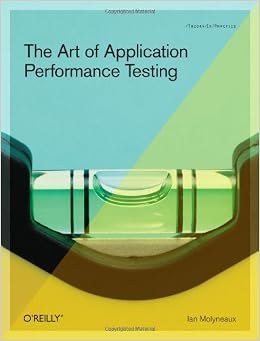
The Art of Application Performance Testing: Help for Programmers and Quality Assurance

The Art of Application Performance Testing: Help for Programmers and Quality Assurance


The Art of Application Performance Testing: Help for Programmers and Quality Assurance


Download Ebook The Art of Application Performance Testing: Help for Programmers and Quality Assurance

The Art Of Application Performance Testing: Help For Programmers And Quality Assurance. Learning to have reading habit is like learning how to try for consuming something that you really don't really want. It will need more times to help. In addition, it will certainly likewise bit force to offer the food to your mouth and ingest it. Well, as checking out a publication The Art Of Application Performance Testing: Help For Programmers And Quality Assurance, in some cases, if you should review something for your new works, you will certainly feel so lightheaded of it. Even it is a publication like The Art Of Application Performance Testing: Help For Programmers And Quality Assurance; it will make you feel so bad.

When getting this publication The Art Of Application Performance Testing: Help For Programmers And Quality Assurance as referral to review, you could get not only motivation but likewise new understanding and lessons. It has more than typical perks to take. What kind of publication that you read it will work for you? So, why ought to get this e-book entitled The Art Of Application Performance Testing: Help For Programmers And Quality Assurance in this short article? As in web link download, you could obtain guide The Art Of Application Performance Testing: Help For Programmers And Quality Assurance by on-line.

When starting to review the The Art Of Application Performance Testing: Help For Programmers And Quality Assurance remains in the appropriate time, it will certainly permit you to relieve pass the reading steps. It will remain in undergoing the precise analysis design. Yet many people could be confused and also careless of it. Also the book will reveal you the fact of life; it doesn't imply that you could actually pass the process as clear. It is to truly use the here and now book that can be among referred books to read. So, having the link of the book to see for you is very happy.

To make certain, many individuals additionally have actually downloaded the soft documents of The Art Of Application Performance Testing: Help For Programmers And Quality Assurance though this site. Just by clicking web link that is offered, you can go directly to guide. One more time, this book will certainly be truly essential for you to review, also they are straightforward, and also they will certainly lead you to be the far better life. So, exactly what do you consider this updated book collection? Allow's check it currently and prepare yourself to make this publication as definitely your collection and also reading materials. Think it!

The Art of Application Performance Testing: Help for Programmers and Quality Assurance

About the Author

Originally hailing from Auckland, New Zealand, Ian Molyneaux ended up in IT purely by chance after applying for an interesting looking job advertised as "junior computer operator" in the mid '70s. The rest is history, 30 years later I've held many roles in IT, although I've shied away from anything management related as I'm a techie at heart. His current role is EMEA SME (Subject Matter Expert) for Application Performance Assurance at Compuware. Presently residing in Buckinghamshire, U.K. with wife Sarah, daughter Sasha, and two cats, and trying to get used to the idea of turning 49!

Read more

Product details

Paperback: 158 pages

Publisher: O'Reilly Media; 1 edition (February 2, 2009)

Language: English

ISBN-10: 0596520662

ISBN-13: 978-0596520663

Product Dimensions:

7 x 0.4 x 9.2 inches

Shipping Weight: 12 ounces

Average Customer Review:

4.6 out of 5 stars

12 customer reviews

Amazon Best Sellers Rank:

#1,486,144 in Books (See Top 100 in Books)

This is one of the first books written on performance testing. The author was looking for a book on the subject, couldn't find any, and so decided to write one himself. It covers all things you will need to think about when you are asked to do a performance test. Such as deciding on what to test, how to generate load, how to script user activities, how the test environment measures up to the production environment, data you need to execute your test but also how to collect data from the servers and applications you are testing. It offers a solid base from where to start your testing activities.However the book feels outdated at times. For instance it mentions Service Oriented Architecture (SOA) as something futuristic. Luckily the author made a conscious effort to make the book technology independent. Because of this most of the content is still relevant today.

Nice to have for any performance test professionals and QA Manager as well as Project Manager to understand more deeply and clearly what / how / when test need to be done including process , timing , testing , analysis , environments , monitoring , data sets and more other steps involved to properly test application to meet performance requirements criteria and customer expectation

Programmer is using this book right now and says that it was very easy to read and follow some of the suggestions.

Not read full but looks good

This is a book for newbies and explain the concepts and process well. Not recommended for seasoned professionals.

I recommend this book to any Quality Assurance specialist who is involved in performance testing. It provides details on how to effectively plan and conduct performance testing. While the book helps to define a test strategy, it also explain how to analyze the performance test results.

Very good for performance testing planing and point out the key points that have to pay attention both in preparation and execution stage of performance testing.

The author describes (on page 1) Performance Testing as a neglected cousin of Unit, Functional, and System Testing. The latter three already have high maturity levels in business organisations.Hardware-software testing in Information and Communications Technology (ICT) performance is specifically, though generically addressed by the author.The performance measurements described by the author makes use of criteria for –- Availability (amount of capacity available)- Response time- Throughput (rate)- Utilization (amount of use of available capacity)The author advises the use of automated testing methods and tools, using hardware-software combinations. The testing procedures are advisedly managed as projects with the use of project management tools (such as MS Project)I, the reader, suspect the paucity of performance testing in ICT industries is largely a consequence of the fact that there are so many variables in local and global networks. For example, at a local level, British Telecoms (BT) has a monopoly on domestic and small business telephonic and Internet infrastructure, which means performance testing on local networks can be extremely variable, because BT does not maintain consistent levels of maintenance (this is an empirical fact)Big businesses also have an insubordinate influence on network availability that small business don’t have, so a dominant organisation like BT will give more attention to bigger businesses, which is why performance testing is less important to them. Smaller businesses therefore need performance testing to optimise their hardware-software performance under disadvantageous conditions.The author therefore quite rightly addresses a subject matter that should have been addressed by all parties concerned to help control local and global industry standards in ICT systems performance.Notwithstanding the aforesaid, the subject matter of the book can be rather boring to readers who are not motivated by a serious interest in systems performance testing (including software programming performance testing)I give it five stars for its comprehensive and readable content. More knowledgeable readers may assess it differently.

The Art of Application Performance Testing: Help for Programmers and Quality Assurance PDF
The Art of Application Performance Testing: Help for Programmers and Quality Assurance EPub
The Art of Application Performance Testing: Help for Programmers and Quality Assurance Doc
The Art of Application Performance Testing: Help for Programmers and Quality Assurance iBooks
The Art of Application Performance Testing: Help for Programmers and Quality Assurance rtf
The Art of Application Performance Testing: Help for Programmers and Quality Assurance Mobipocket
The Art of Application Performance Testing: Help for Programmers and Quality Assurance Kindle

The Art of Application Performance Testing: Help for Programmers and Quality Assurance PDF

The Art of Application Performance Testing: Help for Programmers and Quality Assurance PDF

The Art of Application Performance Testing: Help for Programmers and Quality Assurance PDF

Categories

Unordered List

Sample Text

Blog Archive

Popular Posts

Recent Posts

Text Widget