November 30, 2018


Download Bloody Mohawk: The French and Indian War & American Revolution on New York's Frontier
So, should you review it rapidly? Naturally, yes! Must you read this Bloody Mohawk: The French And Indian War & American Revolution On New York's Frontier and complete it hurriedly? Not! You could obtain the satisfying reading when you read this book while delighting in the spare time. Also you do not read the printed book as below, you could still hold your tablet computer and review it throughout. After obtaining the preference for you to obtain consisted of in this sort of versions, you could take some ways to review.
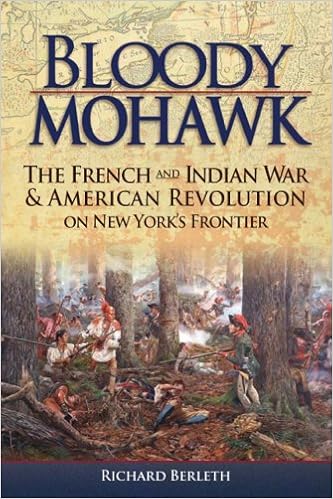
Bloody Mohawk: The French and Indian War & American Revolution on New York's Frontier

Download Bloody Mohawk: The French and Indian War & American Revolution on New York's Frontier
Welcome once more, we constantly welcome the viewers to be in this internet site. Are you the newbie to be visitor? Never mind. This site is really offered and ideal for everyone, Furthermore, the individual who truly requires ideas as well as sources. By this condition, we always make updates to get whatever brand-new. Guides that we collect as well as provide in the checklists are originating from several resources inside and outside of this nation. So, never be question!
As we specified before, the innovation assists us to always realize that life will certainly be consistently simpler. Reviewing book Bloody Mohawk: The French And Indian War & American Revolution On New York's Frontier routine is likewise one of the advantages to obtain today. Why? Modern technology could be utilized to supply the publication Bloody Mohawk: The French And Indian War & American Revolution On New York's Frontier in only soft file system that can be opened each time you desire as well as all over you require without bringing this Bloody Mohawk: The French And Indian War & American Revolution On New York's Frontier prints in your hand.
To overcome your daily problems, related to your jobs, this book can be read page by pages. Of course, when you have no deadline jobs, you will also need what offered by this book. Why? It serves something interesting to learn. When you really love to read, reading something, what you can enjoy is the topic that you really know and understand. And here, Bloody Mohawk: The French And Indian War & American Revolution On New York's Frontier will concern with what you really need now and you need actually for your future.
Once again, what kind of person are you? If you are actually one of the people with open minded, you will certainly have this publication as your reference. Not only having this soft documents of Bloody Mohawk: The French And Indian War & American Revolution On New York's Frontier, however obviously, check out and understands it becomes the must. It is what makes you move forward better. Yeah, move forward is required in this situation, if you desire truly a far better life, you can So, if you truly want to be far better person, read this publication and also be open minded.
Review
Bloody Mohawk offers an enjoyable and readable run through the history of the Mohawk River Valley, embroiling the French and British empires, the Iroquois Federation and various American settlers ranging from Dutch fur-traders to German farmers to New England's evangelicals. I love the way Berleth balances a mighty landscape against equally compelling characters. Constant warfare made this strategic waterway a scary place for much of the 18th century, a terror spread over a landscape of rivers, lakes and portages long obscured by modern development. Berleth's keen sense of geography makes readers want to get out their bicycles, canoes and walking boots to explore the physical terrain he animates with historical figures that show the power of dueling empires and organized Native Americans. --Kathleen Hulser, Public Historian, Senior Curator of History, New-York Historical SocietyRichard Berleth creates an exceptional narrative here that is forever driven by the unique geography of the Mohawk Valley, as well as by the people who settled there from the powerful Iroquois, to avaricious European fur traders, to the colonials who fought in and ultimately won a series of devastating eighteenth-century wars. --Robert Weibel, New York State Historian & Chief Curator New York State Museum
Read more
From the Inside Flap
This sweeping historical narrative chronicles events instrumental in the painful birth of a new nation—from the Bloody Morning Scout and the massacre at Fort William Henry to the disastrous siege of Quebec, the heroic but lopsided Battle of Valcour Island, the horrors of Oriskany, and the tragedies of Pennsylvania’s Wyoming Valley massacre and the Sullivan-Clinton Expedition’s destruction of the Iroquois homeland in western New York State. Caught in the middle of it all was the Mohawk River Valley. Berleth explores the relationship of early settlers on the Mohawk frontier to the Iroquoian people who made their homes beside the great river. He introduces colonists and native leaders in all their diversity of culture and belief. Dramatic profiles of key participants provide perspectives through which contemporaries struggled to understand events. Sir William Johnson is here first as a shopkeeper and farmer, then as a brother Mohawk and militia leader, and lastly as a crown official charged with supervising North American Indian affairs. We watch Johnson in his final years wrestling with Indian war and the unraveling of British America. We meet the frontier ambassador Conrad Weiser, survivor of the Palatine immigration, who agreed not at all with Johnson or his party. And we encounter the young missionary, Samuel Kirkland, as he leaves Johnson’s household for a fateful sojourn among the Senecas.Johnson’s heirs did much to precipitate the outbreak of violent hostilities along the Mohawk in the first months of the War of Independence. Berleth shows how the Johnson family early sought to save their patrimony in the valley just as patriot forces maneuvered to win Native American support or, at least, neutrality. When Joseph Brant, Thayendanegea, rushed Native Americans to war behind the British, it fell to General Philip Schuyler, wealthy scion of an old Albany family, to find a way to protect the Mohawk region from British incursion. His invasion of Canada fails; his tattered army fights at Valcour Island, Ticonderoga, Hubbardton, retreating steadily. Not until on the line of the Mohawk is the enemy stopped.But the battles of Oriskany, Fort Stanwix, Saratoga, and Bennington do not end the fighting in upstate New York. As the national effort moves elsewhere, the Mohawk Valley plunges into bitter internecine conflict. Raids and ambushes go on for four more years until, in the end, the level of destruction from Tory actions and Brant’s war parties staggers the imagination. Two out of every three inhabitants are dead, captured, or missing; farms and villages are laid waste. Charred ruins replace once-prosperous communities in Cobleskill, Cherry Valley, Andrustown, German Flats, Vroomansland, Neversink, Little Falls, Johnstown, Schoharie, Middleburgh, some never to be rebuilt. The villages of the Oneidas, America’s first allies, have been leveled by their former brothers in the Iroquois Confederation. Bloody Mohawk leaves us to ponder the roots of civil war in nonnegotiable ethnic and cultural misunderstandings. It offers a glance into an aspect of New York State history often overlooked.
Read more
See all Editorial Reviews
Product details
Paperback: 384 pages
Publisher: Black Dome Press; 1 edition (January 15, 2009)
Language: English
ISBN-10: 1883789664
ISBN-13: 978-1883789664
Product Dimensions:
6 x 1 x 9 inches
Shipping Weight: 1.2 pounds (View shipping rates and policies)
Average Customer Review:
4.5 out of 5 stars
72 customer reviews
Amazon Best Sellers Rank:
#117,378 in Books (See Top 100 in Books)
I used sections of BLOODY MOHAWK to add to my notes on the French and Indian War and the American Revolution. There are a number of sections that as you read the text one can't put the book down. The strategic location of the Mohawk Valley plays out in both wars. The battles and the setbacks that the American militia and New York settlements suffered at the deadly attacks by the Iroquois tribes. These attacks led by Chief Joseph Brant, during the American Revolution caused the frontier pioneers to suffer horrendous losses. Needless to say these setbacks would stretch over into the 1790s as the Native American tribes attempted to keep New Yorkers and new settlers from moving westward through the Mohawk Valley.This is one book I thoroughly enjoyed, especially the maps of the Mohawk Valley and the wonderfully written history of the area. Like I said earlier, this book added some notes to my US History class at Spartanburg Community College. If one is interested in this area of history, which is shown in the 1940 movie - "Drums Along The Mohawk" - then I highly recommend this book.Ben L.
I should like to think that I'm fairly comfortable with the history of the American Revolution inclusive of the wilderness campaign conducted by George Rogers Clark, but this book was enlightening. Whereas, most of the common knowledge dealing with New York centers upon Long Island, Westchester, Lake Champlain, and Saratoga, Fort Stanwix on the Mohawk is usually given a short shrift. Berleth skips most of the common stuff, but focuses on the guerilla campaign of the Royalists and Iroquoian League all along the Mohawk (Tenonatche) to include the foray into the Wilkes Barre area (Wyoming Massacre). One can deduce that the Senecas and Mohawks were not very nice people while the Oneidas, who supported the colonists, were a bit more gentle. The people that lived during this time were nothing but courageous. The book itself is well put together with exception of the maps. It is recommended that the reader first locate all the maps in the text and mark them for constant reference; otherwise, the maps in the general reading area will not be sufficiently informative. This reader actually looked up maps online before realizing the areas covered were actually in the book, but at the far end of the text.
The Mohawk River Valley is the only significant, natural passage through the 2,000 mile long Appalachian Mountains. For over 200 years, the Iroquois League controlled this strategic thoroughfare, and thus all trade with the interior of the continent as far west as the Mississippi River. European settlement came after the close of Queen Anne's War when Britain encouraged Germans from the Palatinate to begin settling in the valley after 1713. The first English settlers came in 1738 under William Johnston, the man who would ultimately destroy the Iroquois League during the French and Indian War. It was Johnson who would contend with the Dutch inhabitants at Albany as events led up to the American Revolution.Three different wars in the course of 200 years left their mark on this critical passage. French, English, American and Native Americans would make this strategic corridor the most heavily contested real estate on the North American continent. The most savage Native American battles were fought here, with massacres making Custer's Last Stand looking like child's play. Through the Mohawk and the Lake Champlain valleys Britain would defeat France during the French and Indian War. During the American Revolution more men died in the little known Battle of Oriskany than in any other battle, including Saratoga, Yorktown and Bunker Hill. The carnage was simply appalling. In the end, thousands of Loyalists, including the remaining Iroquois, were uprooted and driven into Canada, never to return. And only 40 years later, the completion of the Erie Canal would forever change trading patterns on the North American Continent making New York City the preeminent mercantile center of our Nation and, ultimately, of the world. This is a most amazing story and Richard Berleth's Bloody Mohawk chronicles these wars and the evolution of these events.I haven't read a book this good in a long, long time. I have always had an interest in the development and settlement of early America's northeast frontier and while the author claims there is really nothing new here, I strenuously beg to differ. I found Richard Berleth's approach to the history of the Mohawk Valley and its contiguous early American thoroughfares provided a clearer and more succinct understanding of the region's early history than any previous work I have enjoyed. Bloody Mohawk is so good it makes you want to vacation here in order to better understand the terrain and then reread this book for an even better level of understanding.I found this work a remarkable achievement.
Bloody Mohawk: The French and Indian War & American Revolution on New York's Frontier PDF
Bloody Mohawk: The French and Indian War & American Revolution on New York's Frontier EPub
Bloody Mohawk: The French and Indian War & American Revolution on New York's Frontier Doc
Bloody Mohawk: The French and Indian War & American Revolution on New York's Frontier iBooks
Bloody Mohawk: The French and Indian War & American Revolution on New York's Frontier rtf
Bloody Mohawk: The French and Indian War & American Revolution on New York's Frontier Mobipocket
Bloody Mohawk: The French and Indian War & American Revolution on New York's Frontier Kindle